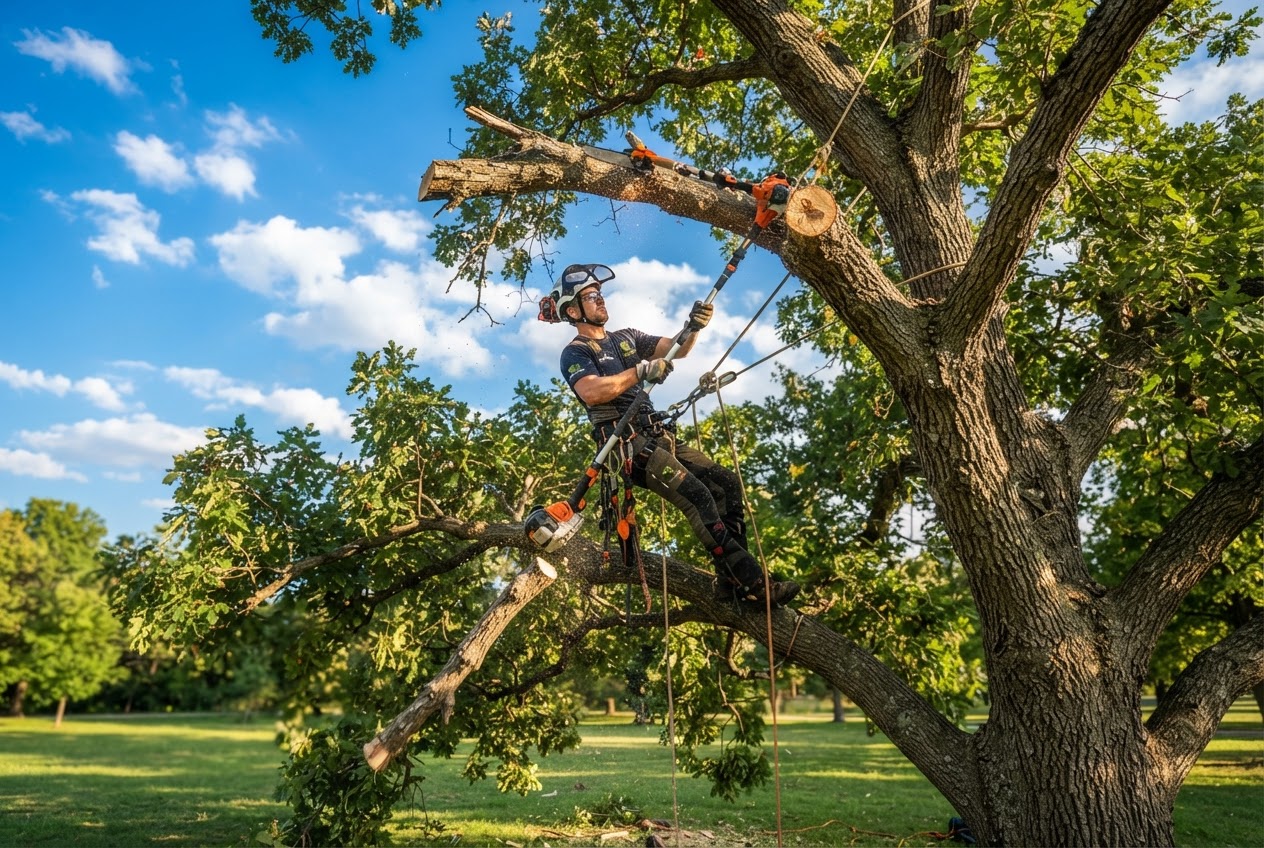
Proper tree trimming is essential for the health, safety, and beauty of your trees. But timing matters — pruning at the wrong time can stress trees, reduce flowering, or even cause long-term damage. So when is the best time to trim trees in Sonoma County?
In this guide, we'll cover the optimal pruning windows for different tree types common to our area, signs that a tree needs trimming, and when to call a professional.
General Pruning Principles for Sonoma County
Sonoma County's Mediterranean climate — with wet winters and dry summers — creates specific considerations for tree pruning. The general rule for most deciduous trees is to prune during dormancy, which in our area means late winter (January through February).
However, different tree types have different needs. Let's break it down by category.
When to Prune Deciduous Shade Trees
Deciduous trees like maples, oaks, and elms are best pruned during winter dormancy. In Sonoma County, this means January through February is the ideal pruning window.
Why Winter Pruning Is Best
- Trees are dormant, so pruning causes less stress
- Without leaves, the tree's structure is easier to evaluate
- Pruning wounds heal quickly when growth begins in spring
- Disease organisms are less active in winter
According to the International Society of Arboriculture, dormant season pruning is the standard recommendation for most deciduous trees in temperate climates.
Exceptions
Some deciduous trees, like Japanese maples, can be lightly pruned in summer to shape them when you can see the full leaf canopy. However, major structural pruning should still be done in winter.
When to Prune Fruit Trees
Fruit trees — including apples, pears, plums, and peaches — are a common feature in Santa Rosa landscapes. These trees require annual pruning to maintain health and maximize fruit production.
Winter Pruning (January–February)
The primary pruning for most fruit trees should be done in late winter while the tree is dormant but before bud break. This allows you to see the tree's structure clearly and make precise cuts.
Summer Pruning (June–August)
Light summer pruning can help control size and remove water sprouts (fast-growing vertical shoots). This is especially useful for keeping fruit trees at a manageable height for harvesting.
When to Prune Ornamental Trees
Ornamental flowering trees require a different approach depending on when they bloom:
Spring-Blooming Trees (Prune After Blooming)
Trees that bloom in early spring — like flowering cherries, plums, and crabapples — form their flower buds on the previous year's growth. Prune these trees immediately after they finish blooming to avoid removing next year's flowers.
Summer-Blooming Trees (Prune in Winter)
Trees that bloom in summer — like crape myrtles — form buds on new growth. These can be pruned in late winter before new growth begins.
When to Prune Evergreen Trees
Most evergreen trees, including pines and many native California trees, require minimal pruning. When pruning is needed:
- Pines: Prune in late spring when the new growth (candles) has extended but before it fully hardens. Pinching back candles controls growth.
- Broadleaf evergreens: Light pruning can be done in late winter or early spring.
- Native oaks: Prune during dry summer months (July–September) to reduce the risk of oak wilt disease. The California Urban Forest Council provides excellent resources on native oak care.
Signs Your Tree Needs Trimming
Regardless of the season, certain situations require prompt attention:
- Dead or broken branches: Remove these anytime they're noticed, as they pose safety hazards.
- Diseased branches: Remove promptly to prevent disease spread.
- Branches touching structures: Limbs touching your roof, siding, or power lines need trimming.
- Crossing or rubbing branches: These create wounds that invite disease.
- Storm damage: Address immediately after storms, following safety protocols.
The USDA Forest Service recommends regular tree inspections to catch these issues before they become serious problems.
When to Call a Professional
While light pruning of small trees can be a DIY project, many tree trimming tasks are best left to professionals. Consider calling a professional tree service when:
- The tree is large or requires climbing
- Branches are near power lines or structures
- The tree shows signs of disease or decline
- Major structural pruning is needed
- You're unsure about proper pruning techniques
Professional tree trimming ensures the job is done safely and correctly, preserving your tree's health and structural integrity. At A & J Yard Service, we provide expert tree trimming throughout Santa Rosa and Sonoma County, with proper techniques for each tree species.
Conclusion
The best time to trim trees in Sonoma County depends on the tree type. For most deciduous and fruit trees, late winter (January–February) is ideal. Spring-blooming ornamentals should be pruned after blooming, and native oaks should be pruned during dry summer months. Dead, diseased, or hazardous branches can and should be removed anytime they're noticed.
If you need professional tree trimming services in Santa Rosa or the surrounding area, contact us for a free estimate. Our experienced team handles ornamental, fruit, and shade trees with care and expertise.
Need Help with Your Yard?
Get a free estimate from Santa Rosa's trusted landscaping team.
Get Free Estimate